
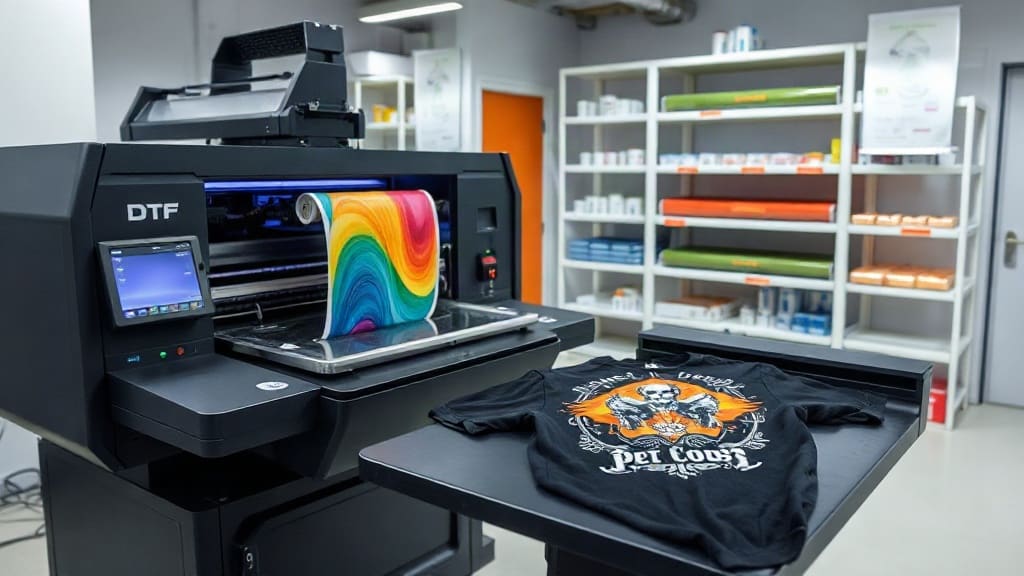
DTF printing has taken the custom apparel industry by storm, offering a versatile and cost-effective way to produce high-quality prints on various fabrics. If you're exploring new printing methods or looking to upgrade your production, understanding this technology is essential. In this guide, I'll walk you through everything you need to know, from the basics to advanced tips, so you can make informed decisions for your business.
What Is DTF Printing?
DTF stands for Direct to Film. It's a printing method where a design is printed onto a special PET film using a specialized printer and then transferred onto fabric using a heat press and adhesive powder. Unlike direct-to-garment (DTG) printing, which prints directly onto the shirt, DTF uses an intermediate film. This allows you to print on a wide range of fabrics, including cotton, polyester, blends, and even hard surfaces like wood or glass.
The process involves several steps: printing the design in reverse onto the film, applying adhesive powder to the wet ink, curing the powder, and then heat pressing the film onto the garment. The result is a vibrant, stretchable, and durable print that can withstand multiple washes.
How Does DTF Printing Work?
Let's break down the DTF process step by step:
- Design Preparation: Your artwork needs to be in a format that supports high resolution, typically PNG with a transparent background. Ensure your design is centered and sized appropriately for your film width.
- Printing onto Film: The printer uses CMYK ink (and sometimes white ink) to print the design onto a special PET film. For dark fabrics, a white underbase is essential to make colors pop. The film is loaded into the printer just like paper.
- Applying Adhesive Powder: While the ink is still wet, a fine adhesive powder is applied over the printed area. This powder sticks only to the ink, not the blank film. It's crucial to apply the powder evenly for a strong bond.
- Curing: The film with powder passes through a curing oven or is heated to melt the adhesive powder. This step solidifies the powder, making it tacky and ready for transfer.
- Heat Press Transfer: The film is placed on the garment with the printed side down. You apply heat and pressure using a heat press, typically at 320°F (160°C) for about 10 seconds. Then, you peel off the film to reveal the design.
Key Equipment Needed
To start DTF printing, you'll need:
- A DTF printer (often a modified Epson or a dedicated model with white ink circulation)
- PET film rolls or sheets
- Adhesive powder (recommended: fine or coarse depending on fabric)
- A heat press or a conveyor dryer
- Curing unit (if not integrated)
Investing in quality equipment ensures consistent results. Many printers come with specialized RIP software to manage color profiles and ink usage.
DTF vs. Other Printing Methods
Understanding how DTF compares to other popular methods helps you choose the right one for your needs.
DTF vs. DTG (Direct-to-Garment)
DTG prints directly onto the shirt using an inkjet printer. It's excellent for large designs with many colors and no white underbase needed on light shirts. However, DTG requires pre-treatment on cotton and can be slower for bulk orders. DTF, on the other hand, offers faster production times because you can print multiple films in advance. It also works on a wider variety of fabrics, including polyester, which DTG struggles with due to dye migration.
DTF vs. Sublimation
Sublimation printing uses heat to transfer dye into polyester fibers, resulting in permanent prints that don't crack or peel. However, it only works on polyester or polymer-coated substrates and requires white garments or sublimation-friendly bases. DTF is more versatile because it works on any fabric, including cotton, and can produce white prints without a special base.
DTF vs. Screen Printing
Screen printing is the classic method for bulk orders, offering low cost per unit and excellent durability. But setup costs are high due to screen creation, making it impractical for small runs. DTF shines for short runs and custom orders because there's no setup cost. You can print one-off designs economically, making it ideal for print-on-demand businesses.
Advantages of DTF Printing
Why are so many businesses switching to DTF? Here are the key benefits:
- Versatility: Print on cotton, polyester, blends, nylon, leather, and even non-textile items like tote bags and mugs.
- Vibrant Colors: With a white underbase, colors pop on dark fabrics without needing a separate pre-treatment.
- Durability: Prints are stretchable and resistant to cracking, peeling, and fading when produced correctly.
- Cost-Effective for Small Runs: No screens or minimum order quantities make it perfect for personalized items.
- Fast Turnaround: You can prepare transfers in advance and press them on demand, speeding up production.
- Soft Hand Feel: Compared to some vinyl transfers, DTF prints are thinner and more flexible, offering a softer texture.
Challenges and Limitations
Like any method, DTF has its own set of challenges:
- White Ink Management: White ink tends to settle and clog if not agitated properly. You need a printer with a good recirculation system and regular maintenance.
- Adhesive Powder Mess: The powder can get everywhere if not handled carefully. Using a powder shaker or a dedicated station helps contain it.
- Film Waste: You must cut the film around the design, leaving unused areas. While recyclable, it adds to material costs.
- Drying and Curing: Inconsistent curing can lead to poor adhesion. Invest in a reliable heat press and monitor temperatures closely.
Despite these, many users find the benefits outweigh the drawbacks, especially when producing custom items.
Tips for Perfect DTF Prints
Based on my experience and industry best practices, here are actionable tips to ensure your DTF prints come out flawless:
Optimize Your Designs
Use high-resolution images (300 DPI). Ensure your design has a transparent background to avoid white boxes around the print. For dark shirts, always include a white underbase layer in your RIP software. For light shirts, you can skip the white ink to save on costs.
Calibrate Your Printer
Regularly run nozzle checks and cleanings to prevent clogs, especially with white ink. Use the RIP software to adjust color profiles for accurate color reproduction. Test prints on different fabric types to see how the ink behaves.
Master the Powder Application
Use a consistent amount of adhesive powder. Too little powder leads to weak adhesion, while too much can make the print stiff. Shake off excess powder thoroughly before curing. Some operators prefer shaking the film in a tray to ensure even coverage.
Manage Curing Temperature and Time
Follow the powder manufacturer's guidelines. Typically, curing at 320°F for 5-7 minutes in an oven or using a heat press works. Monitor the temperature with an infrared thermometer to avoid overcooking the film, which can cause brittleness.
Heat Press Settings
For transfer, use medium to firm pressure. The recommended temperature is around 320°F, but you may need to adjust based on fabric thickness. Press time is usually 10-15 seconds. Ensure the heat platen is clean and flat for even heat distribution.
DTF for Small Businesses
If you're running a print-on-demand or custom apparel business, DTF offers a low barrier to entry. You can start with a desktop DTF printer and a heat press, costing around $3,000 to $5,000, depending on quality. This includes the printer, film, powder, and accessories. Many entrepreneurs use DTF to offer unique products like custom baby onesies, sportswear, and promotional items.
One of the biggest advantages is the ability to print on demand, reducing inventory costs. You can also create a library of pre-printed transfers and press them quickly at markets or events. This flexibility allows you to test new designs without risking bulk purchases.
Future Trends in DTF Printing
The DTF industry is evolving rapidly. Manufacturers are developing more efficient printers with better white ink circulation systems. There's also a growing interest in eco-friendly films and powders. As technology advances, we can expect faster print speeds, lower costs, and even better print quality. Keep an eye on innovations like direct-to-film for non-textile applications, expanding the possibilities even further.
Frequently Asked Questions
Can DTF prints be used on any fabric?
Yes, DTF transfers work on most fabrics, including cotton, polyester, blends, nylon, and even leather. However, for very stretchy materials, ensure you use a stretchable film and powder to prevent cracking. Always test on a sample first to check adhesion and washability.
How do I wash DTF printed garments?
To extend the life of your DTF prints, wash garments inside out in cold water with mild detergent. Avoid using bleach or fabric softeners. Tumble dry on low heat or hang dry. High heat and harsh chemicals can degrade the adhesive over time.
Is DTF printing cost-effective for small orders?
Absolutely. Unlike screen printing, there are no setup fees, so you can print single items profitably. The cost per transfer is slightly higher than screen printing for bulk orders, but for runs under 10 pieces, DTF is often cheaper and faster.
What is the lifespan of a DTF print?
With proper washing and care, a DTF print can last for years without significant fading or cracking. The durability is comparable to screen printing, and many users report excellent results after dozens of washes.
Can I use DTF for white ink printing?
Yes, white ink is a standard part of DTF printing. It's used as an underbase for dark fabrics and can also be used to create white designs on any color. Ensure your printer supports white ink circulation to maintain consistency.